contributed by Jean Miller, Ph.D. & Sharon Hastings, Ed.D, addendum by TeachThought Staff
How about some mental health tips for teachers?
Today, the role of teachers is expanding to include more duties and responsibilities than ever before, including building emotionally strong and healthy students.
However, society often neglects to address or even discuss the mental and emotional well-being of teachers themselves. This neglect has led to two major issues – teacher burn-out and a lack of skilled teachers available as a result.
See also 5 Mistakes I Made As A New Teacher
Given their expanded duties, growing numbers of educators are struggling to cope with the changing demands of their profession. According to a recent survey of over 30,000 educators, conducted by the American Federation of Teachers, more than 75 percent say they do not have enough staff to get the work done, and 78 percent say they are often physically and emotionally exhausted at the end of the day.
The reason most often cited for leaving three-quarters of teachers feeling overworked and exhausted was the adoption of new initiatives without proper training or professional development.
With regard to the workforce, not only did teacher education enrollment fall by 240,000 (a 35 percent decrease) between 2009 and 2014 but roughly eight percent of teachers, including many who are well below the average retirement age, leave the workforce each year.
One way to curb this exodus and keep our nation’s best teachers in the classroom is to ensure they have the personal support and development they need to stay healthy and happy in both their personal and professional lives.
How To Support The Mental Health Of Teachers
According to a recent University of Phoenix survey on mental health, nearly one-third (31 percent) of U.S. adults surveyed cited social stigmas as a barrier to receiving mental health care. This is a relevant and discouraging statistic for the education industry, as many teachers may also share the sentiment that seeking counseling signals weakness or an inability to handle their workload.
The reality is the majority of high-performing teachers struggle with the demands of their jobs; in fact, this struggle causes more than 50 percent of them to burn out in less than five years. This stands as further evidence that our industry professionals have a vested interest in encouraging teachers to seek the help they need so they can be happier and more effective in their roles.
To provide our nation’s educators with the support they need, mental health resources like specialized counseling, continuing education programs, and community efforts geared toward wellness should be prioritized.
By making mental health care more easily accessible to educators, we can help them move forward as professionals and individuals while making strides to eliminate the stigma often associated with seeking mental health treatment.
A few other mental health tips for teachers?
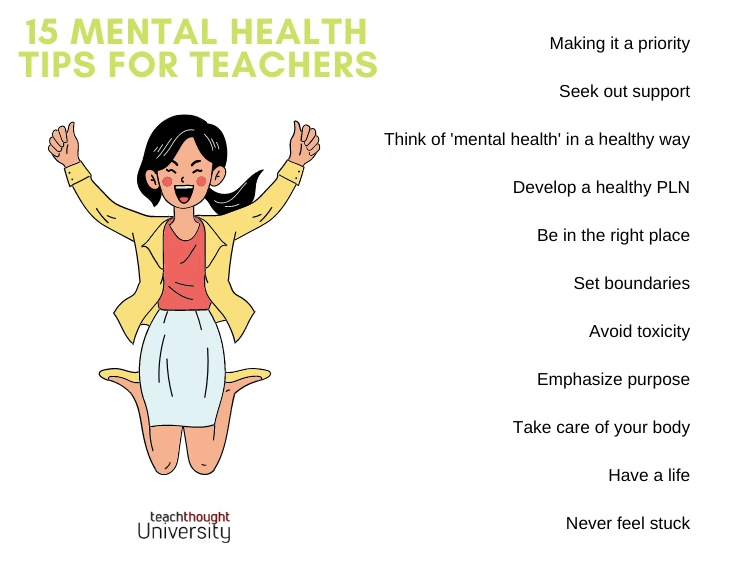
15 Mental Health Tips For Teachers
1. Make it a mental health priority
First and foremost, mental health and wellness best practices must be incorporated into training programs early on in teacher education. It’s up to higher education and state certification boards to take the lead in establishing these programs, to ensure that mental health becomes a priority in our schools and that all teachers are provided the resources they need to succeed and stay healthy.
There’s a reason good teachers quit.
2. Seek out or develop resources, programs, and policies
District leaders also have a role to play in establishing mental health and wellness cultures in schools across the country. As a second step, school systems need to invest in the mental, physical, and social health of their most valuable asset–their teachers. By recognizing and rewarding teachers for all that they do (even the ‘little’ things), encouraging the use of small groups and counseling, and prioritizing mental well-being, administrators can have a dramatic, positive impact on the lives of their teachers.
3. Frame ‘mental health’ in your own mind in a healthy way
Don’t call it ‘mental health’ if a phrase like ‘well-being’ makes more sense.
4. Grow a healthy PLN
A strong professional learning network–both inside and outside of the school building.
5. Be in the right place
A job placement that they feel comfortable with–i.e., the ‘right’ fit for the teacher in terms of position, grade level, school policies, etc. Not every job is a fit for everyone. Well-intentioned people may counsel you that the ‘kids need you,’ but you have to take care of yourself or your teaching’s simply not sustainable.
6. Set boundaries
As much as possible, clear boundaries between school and home life.
7. Avoid toxicity
Avoidance of things–people, departments, committees, events, etc.–that are ‘toxic’ while developing strategies to deal with other not-toxic-but-still-challenging teaching situations
8. Emphasize your purpose
Remind yourself of your purpose as a teacher–why you became a teacher. If you’re unable to realize that vision, see if you can reconcile that vision with your immediate circumstance. If not, that gives you a hint of what maybe should come next.
9. Develop a growth mindset as a teacher
Growth mindsets matter for students and they matter for teachers, too.
10. Teach with gratitude
Teach with gratitude as much as possible.
11. If you’re able, start small
Focus on the good things and every day, try to have more good things than bad. (That’s a start.)
12. Take care of your body, too
Take care of yourself physically: exercise, meditate, do yoga, get enough sleep, etc. Whatever it takes for your body to feel good.
13. If you need help, get help
Don’t be a hero. If you need formal mental health support (in the form of therapy or medication), there’s no reason to hesitate. Get it. Why wait until you’re truly unhappy?
14. Have a life outside of teaching
Have a life outside of teaching–one full of creativity and hope and people and possibility. No matter how nobile teaching is, it’s not worth your well-being.
15. Don’t feel stuck
If possible, never get ‘stuck’ where you feel like you ‘have to’ teach or ‘can’t quit.’ There’s always a way forward. Anytime anyone feels ‘stuck,’ it can convince you your situation is worse than it really is.
Teachers are working each day to build emotionally strong and healthy children, molding the next generation of leaders and change-makers. As educators’ responsibilities continue to grow at a rapid pace, we must do all we can to support their mental well-being. We must support the ‘whole teacher.’
By providing the emotional support our teachers so desperately need and deserve, we can help them grow professionally and live happier lives all while combating the teacher shortage in America that is putting a strain on the entire education system.
Dr. Jean Miller is the University’s Denver Campus College Chair, and Dr. Sharon Hastings is the clinical director and supervisor of the Counseling Clinic at University of Phoenix; Growing The Whole Teacher: Mental Health In Education; 13 Mental Health Tips For Teachers